Week #23: Chasing that cheddar

Deck coverMonths ago, we started working on our pitch deck to express our vision, define our business model, and fund our company. It looks great and tells a compelling story. So, I’ve included select slides here.

In a nutshell, our deck starts by explaining the way it was — back when flour was a staple of our health and the cornerstone of healthy local food systems.
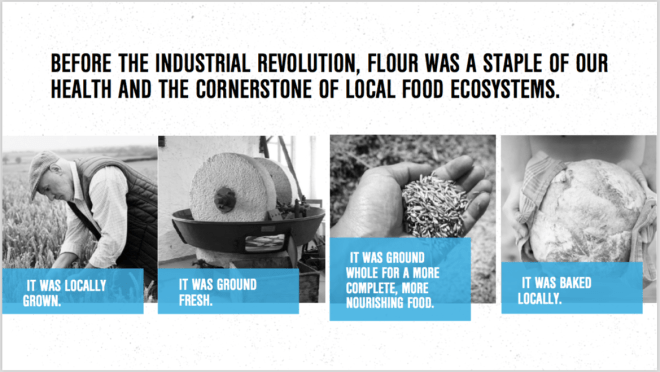
Deck slide - local food systems

Then, we explain how industrialization and consolidation created wheat and flour that’s empty in nutrition, taste and soul. From there, we dig into the category and market opportunity with data that indicates there’s a massive opportunity for a company to build a brand around a local supply chain and by milling fresh flour.
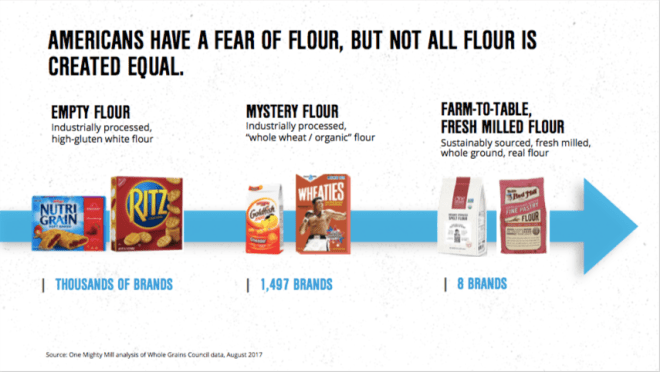
Flour landscape

Next, we introduce our products, packaging, and vision for new product extensions into categories like pasta, cereal and crackers. Our go-to-market strategy is all about winning shelf-space at Whole Foods and building mills in their eastern markets. Finally, we end it with our pro-forma to present the business’ financial viability with some detailed economics.

It took us weeks to complete the deck. And since the first presentation, it’s been a fluid, work in progress that’s been improved by feedback in our meetings.

At this point, I’ve been pitching it for about a month to raise the money required to build the mill and start the business. At the start, you’re completely fired up to finally be able to present the dream. And while it’s been weeks of basically saying the same thing over and over, I do think I’m energized in every meeting. We’ve got something important to say and it comes from a real place. So, I think the passion is clear when I’m presenting.

Anyway, we kicked it off with a few of the most prestigious VC firms in Boston. We don’t want institutional money. But, we did want their feedback and validation. Specifically,  we wanted to hear from the smartest people in food and to test our plan with some of the harshest critics.
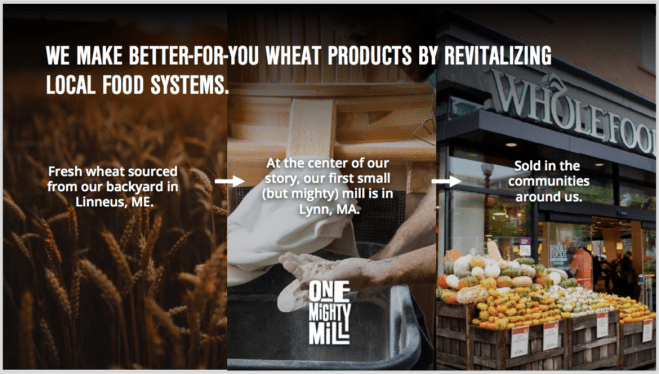
Deck value chain

Since then, I’ve pitched everywhere: on the phone, in big offices, in people’s living rooms after their kids went to bed, in countless coffee shops etc. I’ve pitched all over NYC, Boston, Maine, and the places in between. (One cool highlight was presenting to Gary Vaynerchuck’s team in NY. He’s a legendary entrepreneur and social media mogul.)

The whole process has been reaffirming. I’m certain that our idea is right and opportunity is big. I’m also confident that we can raise the capital we need to do it.

Most importantly, it has reaffirmed what I wanted to do from the start — build a team of people who believe in the same thing.  So, the partners who’ll invest in One Mighty Mill will all be playing the long game. They’ll believe in the shared commitment to build an enduring, special company that makes a difference and makes us proud. Founders get worried about control. The fundraising process reminded me that ultimate control is having a team of people who care about the same thing and trust each other to do what’s right.
Week #3: I know what I don’t know

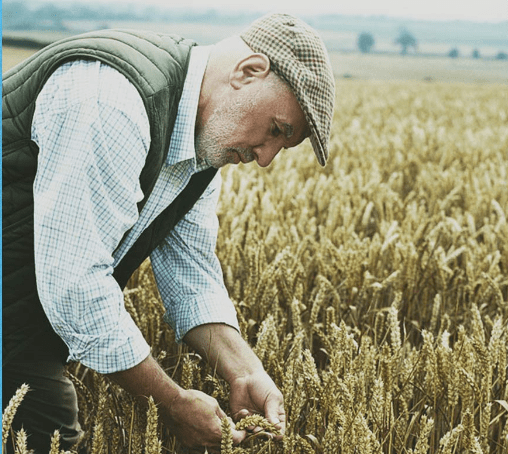
hand pick wheat

I don’t know anything about grain, especially wheat.

And based on the strange responses and looks I’ve been getting from the people I know, I’m pretty sure that nobody else knows anything either.

I don’t know how grain is grown, where it’s grown, or even what it really tastes like. But, I’ve spent the last few weeks learning a really compelling story. It’s the story of the elimination of a local food system and the inevitable damage that’s caused when we mess with the natural order of things and industrialize our food.

To understand the problem, you need to know how it used to be.

Before the industrial revolution, Americans grew, stored, milled, and ate locally grown and milled grains. Farmers brought their dried wheat harvest to the town miller. There, all three of wheat’s main components were ground together: the fiber-rich bran, the nutrient-dense germ, and the starchy endosperm. It was fresh (i.e. perishable). Back then, flour was a complete food that nourished people, farmers, and local food economies.

But, all that changed with the invention of the roller mill — the machine that made shelf stable white flour. Wheat became empty. Empty in flavor, nutrition, and soul. Flour went from being a living, perishable product to a stable, cheap commodity. Everything consolidated. Those local, sustainable networks of farmers, millers, and bakers vanished. Local mills closed and local family farms stopped growing grains. They were replaced by a handful of giant, industrial monoliths in the mid-West. As a result, wheat and flour became a commodity without a sense of place or connection to a community.

Because of the low cost and indefinite shelf-life of refined grain, we (i.e. Americans) started making and eating a ton of it. And for the last century, it’s been slowly and invisibly killing us in the form of diet related conditions like obesity, diabetes, and heart disease. When you remove the fiber and nutrients, flour becomes basically just starch that your body converts to sugar. And too much sugar causes big problems.

We’re left with this huge contradiction in our food culture. We’re obsessed with health and sustainability. But, since we’re completely detached from grains and mills, we ignore the biggest opportunity to improve what we eat and what it does to our health, environment, and community.

So, my history lesson clearly tells me that the idea of reviving local wheat presents a real opportunity to do something important. And as a business opportunity, it’s exciting because of the comparable success of other commodities that became “craft”. It may be hard to remember, but coffee, beer, and chocolate were all once commoditized ingredients (think Folgers Crystals, Miller Lite, and Hershey’s). Before Starbucks and Sam Adams, they were foods and drinks that had no stories of craftsmanship, no sense of place or origin, and no higher purpose.

There’s no “craft” in wheat and it sure feels like it has to happen.

But, it’s also about more than being the next “craft” food trend. Wheat, when grown and processed properly and with integrity, can change the health of our country. So, we can’t let it be an empty commodity. We can’t keep eating it as oblivious, passive consumers in a broken food system. We need to fix this.